
If you're in the garment printing game, you know that speed makes or breaks your turnaround times, order capacity, and bottom line. As a pulp printing machine supplier who works with everything from small boutique brands to large apparel manufacturers, I get asked all the time: What's the real speed difference between different pulp printing machine models? It's not just about claiming "faster" – there's a lot that goes into that number, from screen size, how you load and unload shirts, to the type of printing you're doing. Let's break this down with real, actionable data, no fluff, because I know you just want to know what works for your shop.
First, let's get clear on what "printing speed" actually means here. For pulp printing machines (that's the ones that use water-based or plastisol ink, the go-to for most custom apparel), speed is usually measured in impressions per hour (IPH), meaning how many finished shirts move through the machine per hour. But don't mix that up with "screen exposure speed" or something else – this is actual, usable output you're bringing out for orders. Now, let's go through the most common pulp printing machine models you'll see, and where they land on speed.
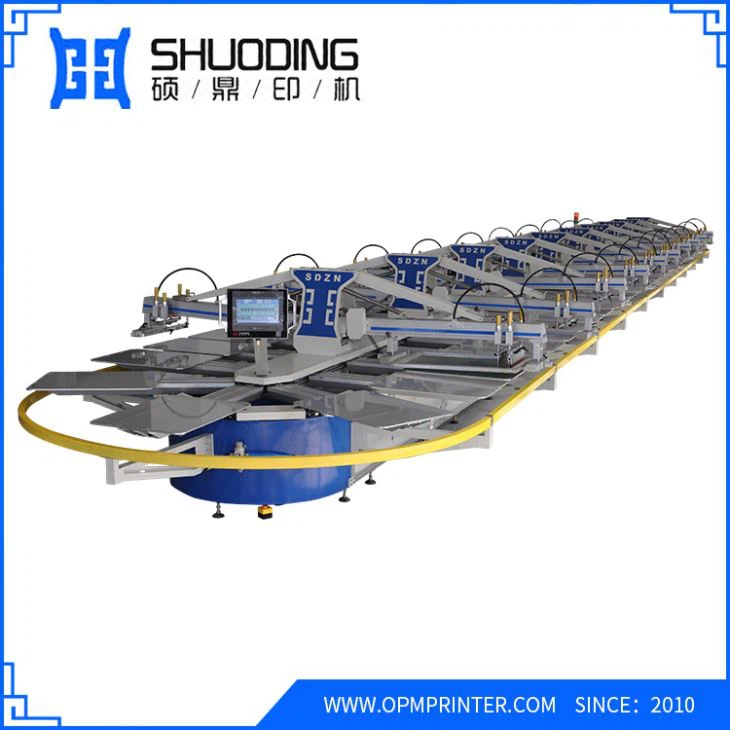
Starting with the workhorse that's super popular for mid-sized shops: automatic oval silk screen printing machines for t-shirts. If you've walked into any busy commercial print shop, you've seen these. They're called "oval" because their carousel of screen stations and printing arms loops in an oval shape, so each station can handle a different step: loading, printing, flashing, drying, unloading. Now, how fast do these run? Most standard entry-level automatic oval printers top out around 1,200 to 1,500 IPH. Wait, but the pro models? We've got ones that run up to 1,800 IPH, as long as you're printing standard sizes (S to XL, no extra-large tees) and simple designs with 2-4 colors. The key here is that the oval design lets multiple things happen at once – while one screen is printing, another is being flashed, another is drying. That cuts down on downtime way more than old round automatic machines. If you're scaling from manual printers, this is the next step, and it's why so many shops swear by them. You can check out more details on what these machines can do, including specs, over at Automatic Oval Silk Screen Printing Machine For T Shirt on our site.
Next up, t-shirt screen printing machines – wait, that term covers a lot, right? So let's split it: manual vs automatic. Manual t-shirt screen printing machines are the ones where you crank the carousel by hand, or move the platen yourself. These are way cheaper, great for small shops or startups with low volume. Their speed tops out around 200 to 300 IPH, max. Why so slow? You're limited by how fast you can move a platen, align a screen, and press the ink down. If you're doing 100 tees a week, that's fine, but if you're doing 1,000, you'll burn out. Then there are semi-automatic t-shirt screen printing machines, which are a middle ground: the carousel is electric, but you still load/unload each shirt manually. Those hit around 600 to 900 IPH, which is double manual, without the big price tag of a full automatic oval. For reference, you can see our full line of t-shirt-focused screen printers (manual, semi, and auto) at Tshirt Screen Printing Machine.
Now, a model that's often confused, but totally different for pulp printing: digital glass printing machines. Wait, hold on – this isn't for t-shirts, right? These use digital transfer pulp to print on glass, windows, signage, even phone cases. Their speed is nothing like the t-shirt machines we just talked about. Most digital glass printers for pulp output are around 150 to 300 square feet per hour, which translates to maybe 50 to 100 medium glass panels an hour. That's way slower than even a manual t-shirt printer, but that's because the target is high-detail, flat substrates that don't need the same kind of high-volume carousel setups. It's a niche machine, so if you're only doing apparel, you can basically ignore this, but if you're diversifying into hard goods, that's the speed you're looking at. You can learn more about these for custom glass work at Digital Glass Printing Machine.
Back to the apparel side: let's circle back to oval printing machines – specifically, the heavy-duty industrial ones. These are the big boys, the ones used by brands that print 10,000+ shirts a week. The difference between these and the standard automatic ovals? They have faster drying systems, higher-torque carousels, and automated registration (so you don't have to adjust screen alignment mid-run). Their speed? We're talking 2,000 to 2,500 IPH, no problem. Some top-tier industrial oval printers even hit 2,800 IPH for single-color runs, though that's rare – most shops don't push that because you'd have to load/unload shirts that fast, which is impossible for humans. The sweet spot for industrial shops is 1,800 to 2,200 IPH, which balances speed with error rate. If you're running consistent orders, this is the machine that'll keep up. Our industrial oval line, including extras like automatic unloading and flash dryers, is at Oval Printing Machine.
Then there's the t-shirt oval printing machine – wait, that's basically the specific subset of oval printers built only for t-shirts, not other apparel like hoodies, tote bags, or uniforms. A lot of people mix this with the general oval printing machine, so I wanted to call it out. What's the speed difference here? T-shirt-specific ovals are designed with platen sizes that fit only standard tees, so they're lighter, can accelerate the carousel faster, and have smaller drying zones tailored to t-shirt ink. Their speed is almost identical to the general automatic oval printers I mentioned earlier – 1,200 to 1,800 IPH – because the core design is the same, just optimized for one garment type. That's a big plus if you're only printing t-shirts, no other goods, because you don't pay for extra capacity you won't use. You can see our t-shirt optimized oval models, which come with quick-change platens for different shirt sizes, at T-shirt Oval Printing Machine.
Wait, but speed isn't just a number – there are caveats that most suppliers won't tell you, so let's get real here. A lot of manufacturers will list a "theoretical maximum IPH," but that's only if you're printing solid black, single color, no flashing, no downtime for changing screens. In real life, if you're doing a 5-color design, you have to wait for each color to flash, so that cuts speed by 20-30%. If you're printing plus-size tees (2XL and up), they're bigger, so the machine can move less fast, dropping IPH by another 10-15%. If you're doing short runs (under 50 shirts), even the fastest machine will be slower because of setup time – automatic machines have setup time too, so a manual printer might actually be faster for 10 shirts. That's why so many shops mix models: use the automatic oval for big runs, use a semi-automatic for small runs, use manual for test prints.
Another thing: pulp type affects speed too. Plastisol ink is thicker, dries slower, so you have to wait longer between prints, which lowers speed. Water-based ink is thinner, flashes faster, so you can run the machine 10-15% faster. That's a huge variable that's rarely included in manufacturer specs, so make sure you factor in what ink you'll use most.
Let's wrap this up with a quick speed comparison cheat sheet, because I know you're skimming:
- Manual T-Shirt Screen Printer: 200-300 IPH (good for small runs, low budget)
- Semi-Automatic T-Shirt Screen Printer: 600-900 IPH (mid-sized shops, balance of cost and speed)
- T-Specific Automatic Oval Printer: 1,200-1,800 IPH (scaling to high volume, t-shirt only)
- General Automatic Oval Printer: 1,500-2,000 IPH (works for tees, hoodies, totes)
- Industrial Oval Printer: 2,000-2,500 IPH (big brands, 10k+ shirts/week)
- Digital Glass Printing Machine: 50-100 IPH (niche glass work, not apparel)
Now, if you're trying to figure out which of these is right for your shop, don't just chase the highest IPH. Ask yourself: how many shirts do you print a week? What kind of designs? Do you print other goods besides t-shirts? What's your budget? I've seen shops buy a $50k industrial printer that runs 2,500 IPH, then end up only printing 500 shirts a week, so they're wasting money on unused capacity. I've also seen small shops stick with manual printers for years because they only do custom orders for local bands, and speed doesn't matter as much as flexibility.
If you're ready to look at these models in more detail, from the t-shirt-specific ovals to the semi-automatic units, we've got all the specs, real user reviews, and even free trial runs for serious buyers. Whether you're upgrading from a manual machine or diversifying into hard goods like glass, we can match you with the right pulp printing machine that fits your speed needs without overspending. Hit us up to chat through your order volume, design types, and any other questions – no hard sell, just straight talk about what works for your shop.