
In the world of umbrella manufacturing, the printing process plays a crucial role in enhancing the aesthetic appeal and marketability of umbrellas. As a leading supplier of Umbrella Printing Machines, understanding the printing area of these machines is essential for both manufacturers and designers. This blog will delve into the intricacies of the printing area of an Umbrella Printing Machine, shedding light on its significance, factors influencing it, and how it impacts the overall umbrella production process.
Understanding the Printing Area
The printing area of an Umbrella Printing Machine refers to the maximum surface area on an umbrella that can be printed using the machine. It is a critical specification as it determines the size and scope of the designs that can be applied to the umbrella fabric. The printing area is usually measured in length and width, and it can vary significantly depending on the type and model of the printing machine.
For standard umbrella sizes, the printing area needs to be carefully calibrated to ensure that the designs cover the desired portion of the umbrella canopy. Some Umbrella Printing Machines are designed to print on the entire canopy, while others may only cover a specific section, such as a panel or a stripe. The flexibility of the printing area allows manufacturers to cater to different customer demands and design preferences.
Factors Influencing the Printing Area
Several factors influence the printing area of an Umbrella Printing Machine. One of the primary factors is the machine's design and construction. Different types of printing machines, such as screen printing machines, digital printing machines, and rotary printing machines, have varying capabilities in terms of the printing area they can cover.
Screen printing machines, for example, are known for their versatility and can be used to print on various sizes of umbrellas. The printing area of a screen printing machine is determined by the size of the screen frame and the movement range of the printing mechanism. Larger screen frames can accommodate bigger designs, but they also require more space and may limit the speed of the printing process.
Digital printing machines, on the other hand, offer more flexibility in terms of the printing area. They can print on irregular shapes and sizes, and the printing area can be adjusted according to the design requirements. However, digital printing machines may have limitations in terms of the resolution and color accuracy, especially for large-scale printing.
Another factor that influences the printing area is the type of umbrella fabric. Different fabrics have different textures, thicknesses, and stretchability, which can affect the printing process and the quality of the printed designs. Some fabrics may require special treatment or printing techniques to ensure that the designs adhere properly and do not fade or crack over time.
Impact on Umbrella Production
The printing area of an Umbrella Printing Machine has a significant impact on the overall umbrella production process. It affects the efficiency, cost, and quality of the printed umbrellas. A larger printing area can increase the productivity of the printing process, as more designs can be printed in a single pass. This can lead to faster production times and lower costs per unit.
However, a larger printing area also requires more ink, screen frames, and other printing materials, which can increase the production costs. Additionally, printing on a larger area may require more precise alignment and registration, which can be challenging and time-consuming. Therefore, manufacturers need to carefully balance the printing area with the production costs and quality requirements.
The printing area also affects the design possibilities of the umbrellas. A larger printing area allows for more complex and detailed designs, which can enhance the aesthetic appeal and marketability of the umbrellas. It also provides more space for branding, advertising, and customization, which are important factors in the competitive umbrella market.
Our Umbrella Printing Machines and Their Printing Areas
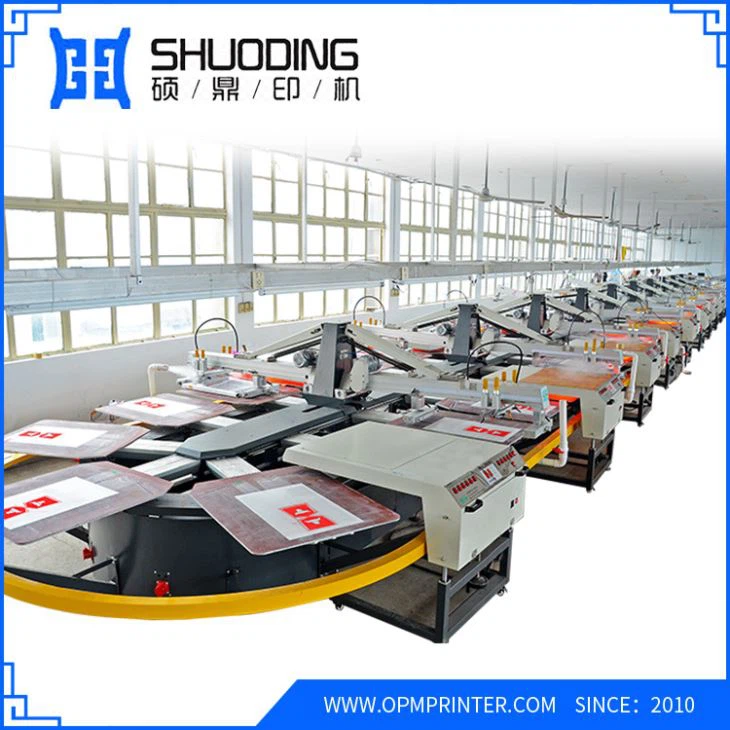
As a supplier of Umbrella Printing Machines, we offer a wide range of machines with different printing areas to meet the diverse needs of our customers. Our Oval Screen Printing Machine is designed for high-volume production and can print on large umbrella canopies. It features a large printing area and a high-speed printing mechanism, making it ideal for mass-producing umbrellas with complex designs.
Our H9 Full Servo Oval Printing Machine is another advanced option that offers precise control over the printing process. It has a flexible printing area that can be adjusted according to the size and shape of the umbrella, allowing for more customized printing options.
In addition to our oval printing machines, we also offer T-shirt Printing Machine that can be used for printing on smaller umbrella panels or accessories. These machines are compact and easy to operate, making them suitable for small-scale production or prototyping.
Our Automatic Elliptical Printing Machine and Automatic Rotary Screen Printing Machine are also popular choices for umbrella printing. They offer high-speed printing and excellent print quality, making them ideal for large-scale production.
Contact Us for Your Umbrella Printing Needs
If you are in the market for an Umbrella Printing Machine or have any questions about the printing area and its capabilities, please do not hesitate to contact us. Our team of experts is ready to provide you with detailed information and guidance on choosing the right machine for your specific needs. We can also offer customized solutions to meet your unique requirements and help you maximize the efficiency and quality of your umbrella printing process.
Whether you are a small business looking to start printing umbrellas or a large manufacturer seeking to upgrade your existing equipment, we have the expertise and the products to support your success. Contact us today to discuss your options and take the first step towards enhancing your umbrella printing capabilities.